Urban research − understanding urban change in its diversity
The process of urbanisation in the early 21st century is enormously dynamic: Urban spaces emerge, grow and change, their transformation takes many forms and is increasingly discontinuous and disparate. A better understanding of these processes is a central concern for the spatial urban researchers at the ILS. We investigate the various dimensions of urban change at different levels of scale and in international comparison. In active dialogue with practitioners, policy-makers and societal stakeholders, we gain important insights from this for the sustainable transformation and design of urban spaces.
We have three main research interests.
The process of urbanisation in the early 21st century is enormously dynamic: Urban spaces emerge, grow and change, their transformation takes many forms and is increasingly discontinuous and disparate. A better understanding of these processes is a central concern for the spatial urban researchers at the ILS. We investigate the various dimensions of urban change at different levels of scale and in international comparison. In active dialogue with practitioners, policy-makers and societal stakeholders, we gain important insights from this for the sustainable transformation and design of urban spaces.
We have three main research interests.
News
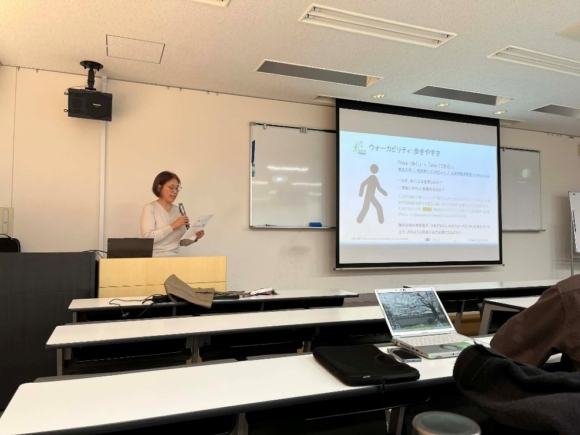
New Professorship through cross-appointment with Osaka University in Japan
From April 2026 Dr. Noriko Otsuka, who is a Senior Research Manager for Research Group Spatial Planning and Urban Design, will be appointed as a Specially Appointed Professor at Osaka University in Japan. Over the last 7 years D3 Centre has hosted her Associate Professorship through the ILS and Osaka University’s cross-appointment scheme. More… Mehr…

Fachforum „Wohnen macht Stadt“: Zukunft großer Siedlungen: Städtebauliche und wohnungswirtschaftliche Herausforderungen im Bestand
Große Siedlungen, wozu Nachkriegssiedlungen der 1950er Jahre in Zeilenbauweise sowie Großwohnsiedlungen aus den 1960er, 1970er und frühen 1980er Jahren zählen, sind unverzichtbarer Bestandteil des Wohnungsangebots in Nordrhein-Westfalen. Sie stehen angesichts demografischer Veränderungen, steigender Anforderungen an Klimaanpassung und energetische Sanierung sowie veränderter Wohnbedürfnisse vor komplexen Herausforderungen. Ihre großmaßstäblichen Strukturen, oft klaren Eigentumsverhältnisse und gewachsenen Nachbarschaften bieten zugleich Chancen, sie als vielfältige, lebenswerte und sozial gerechte Wohnorte weiterzuentwickeln. Beim Fachforum am 20. Mai in Dortmund wollen wir gemeinsam diskutieren, welche politischen, planerischen und wohnungswirtschaftlichen Rahmenbedingungen diese transformative Weiterentwicklung großer Siedlungen ermöglichen, wie Kooperationen zwischen Kommunen, Wohnungsunternehmen und Zivilgesellschaft gelingen können und wie sich Zielkonflikte konstruktiv moderieren lassen. Weitere Informationen und Anmeldung
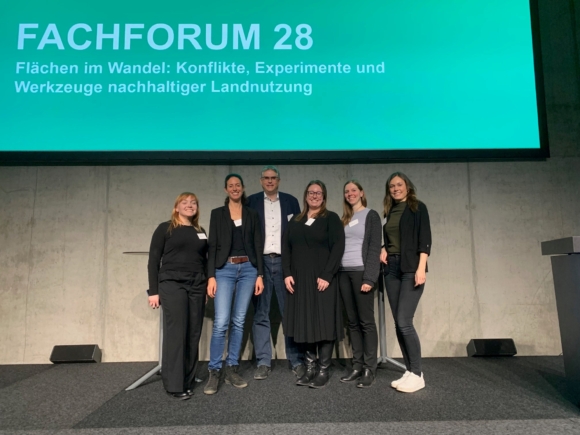
„Agrarsysteme der Zukunft“ und „PlanTieFEn“ beim Zukunftsforum in Berlin
Wie können Konflikte um Landnutzung konstruktiv bearbeitet werden und wie sehen neue Wege für ein vorausschauendes, kooperatives Flächenmanagement aus? Auf dem Zukunftsforum Ländliche Entwicklung des Bundesministeriums für Landwirtschaft, Ernährung und Heimat hatte das Team von „Agrarsysteme der Zukunft“ die Möglichkeit, das Fachforum 28 „Flächen im Wandel“ mitzugestalten – gemeinsam mit dem Öko-Institut, dem Leibniz-Zentrum für Agrarlandschaftsforschung (ZALF), dem Leibniz-Institut für Gemüse- und Zierpflanzenbau (IGZ), neuland21 und der Wüstenrot Stiftung. Mehr…
100. Promovierenden-Kolloquium am ILS
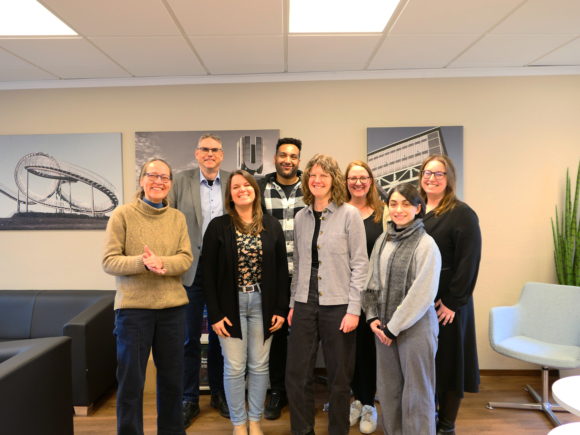
Mit dem 100. Promovierenden-Kolloquium feierte das ILS am 13. Januar 2026 ein besonderes Jubiläum . Seit 2009 ist das regelmäßig stattfindende Kolloquium ein zentraler Baustein der Nachwuchsförderung am ILS und bietet Promovierenden einen Raum für Austausch, Diskussion und wissenschaftliche Weiterqualifizierung.Das Promovierenden-Kolloquium ist Teil der umfassenden Bemühungen des ILS, seine Promovierenden bestmöglich zu unterstützen. Dabei entstehen die meisten Promotionen im Zuge der Forschungsarbeiten am ILS. Neben dem Kolloquium werden die Promovierenden auch individuell begleitet, unter anderem über Promovierendenvereinbarungen und weitere Unterstützungsangebote. Zur Meldung
Arbeiten im ILS: Studentische Mitarbeit in den Projekten „Agrarsysteme der Zukunft“ und „FoodConnectRuhr“
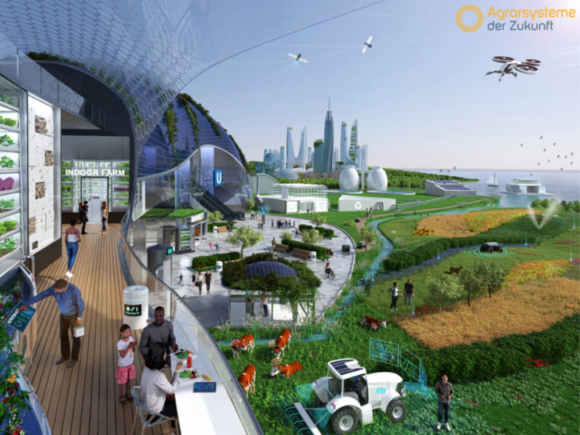
Die Forschungsgruppe Raumbezogene Planung und Städtebau sucht ab März diesen Jahres studentische Unterstützung in den Projekten “Agrarsysteme der Zukunft” und “FoodConnectRuhr”. Beide Stellen umfassen jeweils 9 bis 12 Wochenstunden. Die zu bearbeitenden Themen umfassen die nachhaltige Transformation von Agrar- und Ernährungssystemen mit besonderem Fokus auf regionale Lebensmittelwertschöpfungsketten, zukunftsfähige Agrarsysteme, Stadt-Land-Beziehungen sowie Anpassungsstrategien an den Klimawandel. Weitere Informationen zu den konkreten Aufgaben stehen in der Stellenausschreibung.
Publications

Segregation in primary schools and the production of inequality
ILS researcher Isabel Ramos Lobato, together with other colleagues, has published an article in the journal sub/urban. This article examines the causes of primary school segregation in a large city in North Rhine-Westphalia. Segregation in primary schools and the production of inequality. In many German cities, there is a serious degree of segregation at primary school level. This is problematic since primary schools are a key determinant of social mobility and social cohesion. Based on a combination of quantitative and qualitative data, our findings show how spatial, individual, and institutional factors, as well as their interactions, contribute to the emergence and reinforcement of school segregation. This illustrates the complexity of segregation processes within the education system. A better understanding of these interactions is essential not only from a scientific perspective, but also to enable the implementation of targeted measures to alleviate school segregation. https://doi.org/10.36900/suburban.v13i2/3.1025. Further current selected papers can be found here.

Energy renovation challenges in dense low-income neighbourhoods with fragmented ownership: insights from Dortmund–Nordstadt, Germany
ILS researcher Stefano Cozzolino has published an article in the journal Town Planning Review together with Lisa Haag. Policy documents increasingly identify energy-efficient housing renovation as a global priority that requires implementation at the local level. This article examines the challenges of implementing such energy-efficient renovation strategies in dense, low-income neighbourhoods characterised by a high degree of ownership fragmentation. Focusing on Dortmund–Nordstadt, Germany, the study combines spatial data analysis, policy review, and in-depth engagement with private owners and municipal stakeholders. It explores the specific perspectives of private actors while drawing broader implications for urban planning. The findings highlight the importance of context-sensitive approaches and point to the potential of neighbourhood-specific, low-threshold engagement formats to facilitate action. https://doi.org/10.3828/tpr.2025.37. Further current selected papers can be found here.
The impact of migration background and ethnicity on car, bus and bicycle use in England
People with a migration background and/or who identify themselves with an ethnic group tend to have different travel behaviour in comparison to the population majority. A better understanding of this nexus is needed, yet there is a lack of quantitative studies on this topic in Europe and in the United Kingdom. ILS researcher Janina Welsch and Giulio Mattioli from TU Dortmund fill this gap by analysing data from the 2018–2019 wave of the UK House-hold Longitudinal Survey. With ordinal regression models, they investigate the impact of migration generation and ethnicity on the frequency of car, bus, and bicycle use. The results show that travel behaviour varies substantially depending on migration background and ethnicity, with the latter playing a larger role. More: https://doi.org/10.1007/s11116-025-10696-5. Further current selected papers can be found here.

„New“ arrival spaces between inclusion and exclusion. A literature anal-ysis of spatial migration patterns in Europe
ILS researchers Hannah Brill, Isabel Ramos Lobato, and Nils Hans, together with Miriam Neßler and Heike Hanhörster from TU Berlin, have published an article in the journal sub/urban. This article analyzes the spatial effects of the increasing diversification of migration processes. The focus is on newly forming arrival areas in Europe beyond „traditional“ urban migration centers. Based on a systematic literature review, five central dimensions can be identified that shape the local arrival conditions for newcomers. The article argues for a differentiated view of local arrival contexts in the sense of the „local turn“ in migration research, which takes into account the complex interactions between local and supra-local conditions. https://doi.org/10.36900/suburban.v13i2/3.1027. Further current selected papers can be found here.
Supporting the transformation of urban food systems: The food network of the city of Dortmund.
ILS researchers Melissa Leimkühler, Kathrin Specht, Chiara Iodice, and Barbara Schröter have published an article in the journal Urban Agriculture & Regional Food Systems. The article examines how Dortmund’s food system can be made sustainable. It focuses on the key actors, their roles and relationships, and the obstacles to transformation. The analysis shows that close cooperation between civil society and local authorities is crucial and that the Dortmund Food Policy Council plays a central networking role. Successful further development requires, above all, better coordination, financing, political participation, visibility, and networking. The results provide concrete impetus for strengthening urban food systems. https://doi.org/10.1002/uar2.70029. Further current selected papers can be found here.
Events
Forum StadtBauKultur: Werkzeuge für den Wandel – Digitale Ansätze für eine klimaresiliente Stadt
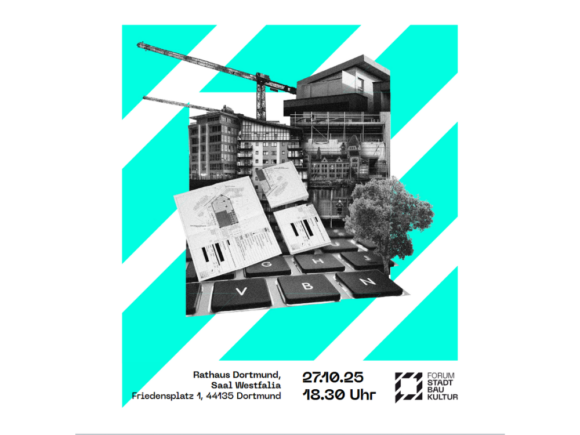
Immer deutlicher spüren wir die Auswirkungen des Klimawandels. Auch digitale Werkzeuge können dabei helfen, den Wandel der Stadt mit Blick auf Klimaveränderungen zu begleiten. Diese stehen im Mittelpunkt des nächsten Forums Stadtbaukultur am 27. Oktober im Dortmunder Rathaus. Die ILS-Wissenschaftler*innen Dr. Shaojuan XU und Dr. Bastian Heider stellen dabei eine 3D-Wärmelandkarte des Dortmunder Stadtgebiets und eine 3D-Schattensimulationstool zur Analyse urbaner Hitzebelastung vor. Die Ergebnisse stammen aus dem Projekt CATCH4D. Weitere Informationen und die Anmeldung finden Sie auf der Internetseite des Forums

Werkbund Regionale Dortmund
Am 29. September 2025 um 18.30 Uhr findet in der Aula des Fritz-Henßler-Berufskollegs in Dortmund das nächste Forum StadtBauKultur statt. Inhaltlich knüpft die Veranstaltung an vorangegangene Termine an und beleuchtet erneut das Zukunftsthema Bauen im Bestand. Mit dem Fritz-Henßler-Berufskolleg bildet der Tagungsort selbst das Schwerpunkthema des Abends. Der Dortmunder Werkbund Architekt Tilo Pfeiffer stellt die vorbildliche Sanierung des mehrfach national und international ausgezeichneten Bildungsbaus vor und lädt später zu einem Rundgang ein. Zuvor wird Professor Wolfgang Sonne von der Technischen Universität zum Umbau im Dortmunder Stadtbild referieren sowie Thomas Schmidt als Vorstand Deutscher Werkbund NW die „Doppelte Chance für die Bestandssanierung“ in Dortmund einordnen. Mehr…
Wissenschaftsjahr 2025: Themenabend Zukunftsenergie in Dortmund
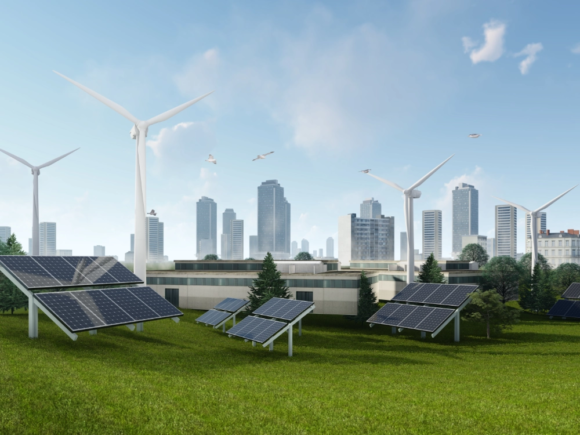
Wie wichtig Energie ist, wurde zuletzt am massiven Stromausfall in Portugal und Spanien deutlich. Doch wie können sich Städte und ihre Bewohner*innen zukunftssicher aufstellen? Wie gelingt die Energiewende? Um diese Fragen geht es beim Themenabend zur Energiezukunft am Montag, 16. Juni, auf der Eventfläche TwentyOne der DEW21 in Dortmund. Die Stadt Dortmund veranstaltet ihn gemeinsam mit dem Projekt „Power2Change: Mission Energiewende“ sowie weiteren Partner*innen aus Wissenschaft und Wirtschaft im „Wissenschaftsjahr 2025 – Zukunftsenergie“. ILS-Wissenschaftlerin Sarah Friese ist als Expertin mit dabei. Infos und Anmeldung
Dortmunder Dialog 90: IGA 2027 – Blumenzauber oder Stadtentwicklung
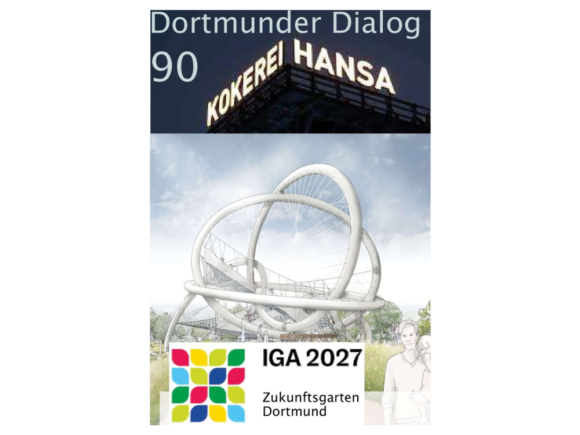
Die Internationale Gartenausstellung 2027 im Ruhrgebiet steht unter der Leitfrage „Wie wollen wir morgen LEBEN?“. Dortmunds Hauptbeitrag zur IGA 2027 entsteht im Nordwesten des Stadtgebiets rund um das Gelände der ehemaligen Kokerei Hansa und den Deusenberg in Huckarde. Mit dem „Zukunftsgarten“ wird ein großräumiges Stadtentwicklungs- und Infrastrukturprojekt realisiert, das mit hohen Freiraumqualitäten neue Strukturelemente für die ganze Stadt schaffen soll. Wie genau nutzt Dortmund diese Gelegenheit, sich der nationalen und internationalen Öffentlichkeit zu präsentieren? Und was bleibt, wenn die Blumen verblüht sind? Dazu diskutiert der 90. Dortmunder Dialog am 2. Juli im Nahverkehrsmuseum Bahnhof Mooskamp. Zu den Mitwirkenden zählt auch ILS-Wissenschaftler Prof. Dr. Thomas Weith. Mehr…
Forum Stadtbaukultur Dortmund
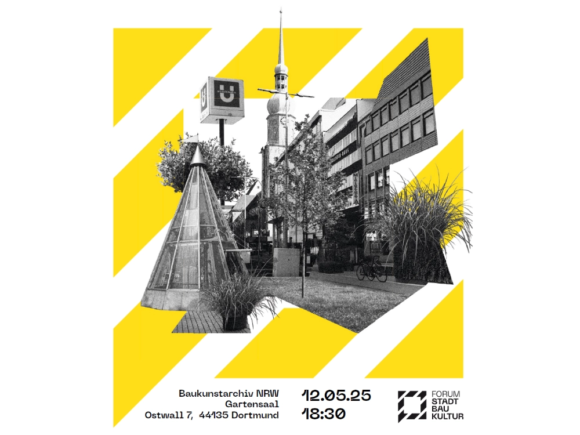
“RE:START Kampstraße” lautet das Thema des nächsten Forums Stadtbaukultur. Am Montag, 12. Mai 2025 um 18.30 Uhr wird im Gartensaal des Baukunstarchiv NRW um die zukünftige Gestaltung der Kampstraße in der Dortmunder Innenstadt diskutiert. Durch ihre funktionale und räumliche Bedeutung als markante Ost-West-Achse durch die Dortmunder City, nimmt die Straße eine zentrale Position mit hohen Erwartungshaltungen aus der Stadtgesellschaft ein. Ein umfangreicher Beteiligungsprozess soll die interessierte Öffentlichkeit dazu anregen, Zielvorstellungen für die Maßnahme zu formulieren. Um Anmeldung wird gebeten. Mehr…