Urban research − understanding urban change in its diversity
The process of urbanisation in the early 21st century is enormously dynamic: Urban spaces emerge, grow and change, their transformation takes many forms and is increasingly discontinuous and disparate. A better understanding of these processes is a central concern for the spatial urban researchers at the ILS. We investigate the various dimensions of urban change at different levels of scale and in international comparison. In active dialogue with practitioners, policy-makers and societal stakeholders, we gain important insights from this for the sustainable transformation and design of urban spaces.
We have three main research interests.
The process of urbanisation in the early 21st century is enormously dynamic: Urban spaces emerge, grow and change, their transformation takes many forms and is increasingly discontinuous and disparate. A better understanding of these processes is a central concern for the spatial urban researchers at the ILS. We investigate the various dimensions of urban change at different levels of scale and in international comparison. In active dialogue with practitioners, policy-makers and societal stakeholders, we gain important insights from this for the sustainable transformation and design of urban spaces.
We have three main research interests.
News

Wohnen macht Stadt: (Neues) Wohnen in Zentren
Innenstädte stehen angesichts tiefgreifender struktureller Veränderungen unter erheblichem Druck: Der Bedeutungsverlust des stationären Einzelhandels infolge des Onlinehandels, zunehmende Leerstände, das Verschwinden großer Warenhäuser und ein verändertes Mobilitätsverhalten stellen Kommunen vor komplexe Herausforderungen. Gleichzeitig entstehen neue Spielräume für die Umnutzung zentral gelegener Immobilien und Flächen. Gefragt sind stadtentwicklungspolitische Ansätze, die urbane Zentren als vielfältige, lebenswerte (Wohn-)Räume jenseits rein konsumorientierter Nutzungen neu denken. Beim Fachforum am 11. Dezember ab 14 Uhr wollen wir digital diskutieren, wie diese transformativen Prozesse gelingen können. Weitere Infos und Anmeldung
JRF-WissensLunch: 15-Minuten-Stadt – Konzeptionelle Grundlagen und planungspraktische Beispiele
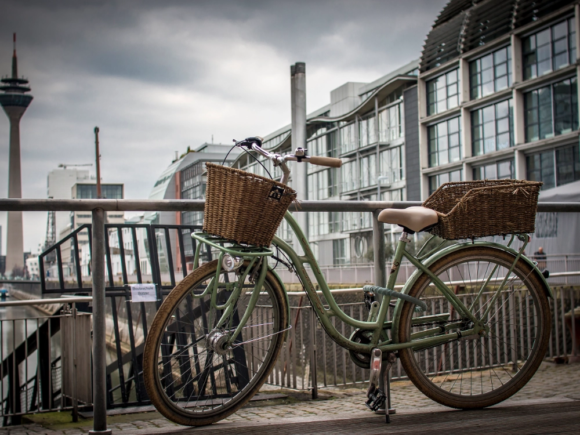
Das Planungskonzept der 15-Minuten-Stadt hat in der Stadtforschung und Stadtplanung innerhalb der vergangenen Jahre große Beachtung gefunden. Es besagt, dass alle Menschen ausgehend von ihrem Wohnort innerhalb von 15 Minuten zu Fuß oder mit dem Fahrrad alle Orte erreichen können, die sie zur Bewältigung ihres Alltags aufsuchen müssen. ILS-Wissenschaftler Dr. Thomas Klinger stellt beim nächsten JRF-WissensLunch am Freitag, den 26. Oktober, um 12 Uhr den Ursprung und die Kernbestandteile des Konzepts vor. Dabei erläutert er die Potenziale anhand von Forschungsergebnissen und Best-Practice-Beispielen. Das digitale Angebot ist kostenfrei. Zugangslink über die Seite der JRF.
JRF-Leitthementag „Globalisierung & Integration“: Zeitenwende der Migrationspolitik? Trump 2.0 und der Regierungswechsel in Deutschland
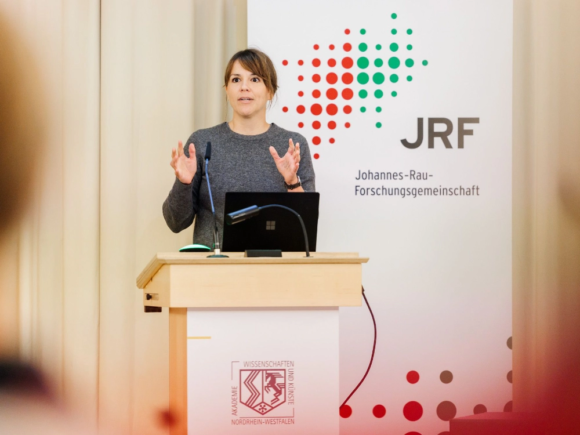
ILS-Wissenschaftlerin Dr. Isabel Ramos Lobato hat beim Leitthementag der JRF einen Vortrag zum Thema „Ankunftsquartiere: alte und neue Herausforderungen“ gehalten. Dabei ging es ihr vor allem darum gängige populistische Narrative über Ankunftsquartiere mit Ergebnissen aus der eigenen Forschung zu entkräften. Mehr…
Summary: Spatial Science Colloquium 2025
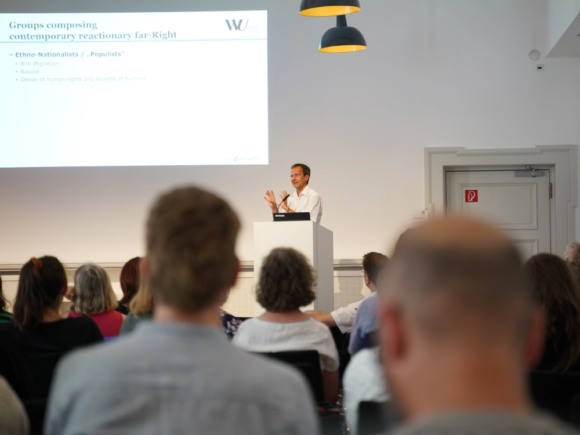
At the end of June, the Leibniz Research Network “Spatial Knowledge for Society and Environment – Leibniz R” invited experts from science and practice to discuss progress and setbacks in socio-ecological transformation in Germany. The spatial science colloquium was entitled “Excessive Change? New Departures and Old Contradictions in Socio-Ecological Transformation”. More…
Neue Workshopreihe zum Thema Wohnraum
Das Ministerium für Heimat, Kommunales, Bau und Digitalisierung des Landes Nordrhein-Westfalen hat am 2. Oktober die neue Veranstaltungsreihe „Kommunale & lokale Akteure als treibende Kraft: Wohnungen bauen und vermieten in ländlichen Regionen“ gestartet. ILS-Wissenschaftler Michael Kolocek berichtete in einem Einführungsimpuls über aktuelle Herausforderungen der Wohnraumförderung und präsentierte Erfahrungen und Ergebnisse aus der vorangehenden Workshopreihe des Ministeriums. Mehr…
Publications

Measuring the social impact of City-region food system initiatives (CRFSIs): A systematic review of indicators and metrics.
ILS-researchers Dr. Kathrin Specht and Chiara Iodice, in collaboration with other colleagues, published a paper in the journal „Sustainable Cities and Society“. In this paper, they challenge claims about the presumed immeasurability of social impacts of City-region food system initiatives (CRFSIs). Through the review of 234 research papers, they retrieved social indicators and metrics that underline the proven and measurable impact of CRFSIs on social sustainability. https://doi.org/10.1016/j.scs.2025.106462. Further current selected papers can be found here.

Die räumliche Steuerung von Photovoltaik-Freiflächenanlagen
Jonas Marschall aus der Forschungsgruppe „Raumbezogene Planung und Städtebau“ hat einen Aufsatz in der Zeitschrift für Umweltrecht veröffentlicht. Darin geht es um die räumliche Steuerung von Photovoltaik-Freiflächenanlagen. https://doi.org/10.5771/9783748954552-43 Weitere aktuelle Fachpublikationen finden Sie hier.
“I’d rather live in Munich, but my job in Stuttgart is more attractive”. The role of corporate ties in decisions to maintain multi-local living arrangements.
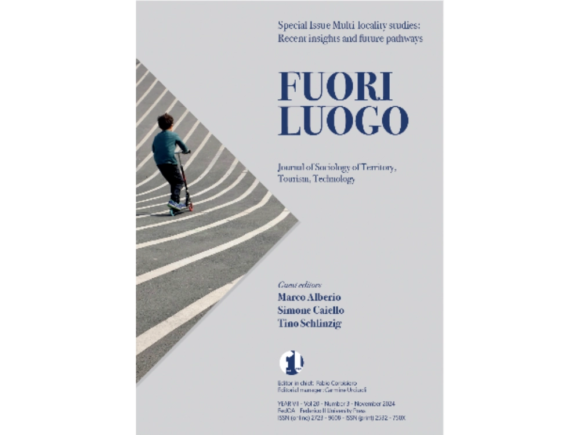
The ILS researchers Lisa Garde and Cornelia Tippel have published an article in the special issue Multilocalism in the Fuori Luogo Journal of Sociology of Territory, Tourism, Technology. In it, they examined the company loyalty of employees with multiple residences. The aim was to analyse the company loyalty of multinational employees working in Stuttgart (Germany) and to find out how such ties influence multinational coexistence. https://doi.org/10.6093/2723-9608/9444. Further current selected papers can be found here.

Analysing the determinants of perceived walkability, and its effects on walking
Anna-Lena van der Vlugt, Janina Welsch, Noriko Otsuka – scientists from the research group “Mobility and Space” – have published an article in the journal “Transportation Research Part A: Policy and Practice”. It presents the results of one of the first transportation studies analysing the determinants of perceived walkability and how it affects walking behaviour. The results show that perceived walkability is mainly affected by walking attitudes and that perceived walkability has an impact on walking frequency, walking distance and walking duration. It is therefore important for policy makers and urban planners to increase perceived walkability levels to stimulate walking, thereby improving physical activity and the liveability of neighbourhoods. For further studies, it is also suggested to analyse the relationship between perceived and objectively measured walkability in greater detail and to investigate the applied SPWS (Short Perceived Walkability Scale; compact scale for measuring perceived walkability), its determinants and the results of walking in other contexts as well. https://doi.org/10.1016/j.tra.2025.104498. Further current selected papers can be found here.

Walking travel satisfaction – A comparison of three European cities
ILS researchers Janina Welsch, Noriko Otsuka and Anna-Lena van der Vlugt have published an article in the “Journal of Urban Mobility”. The study examined and compared walking satisfaction in three case study cities in Europe: Dortmund, Genoa, and Gothenburg as part of the EU project „WalkUrban“. By analyzing household survey data, levels and determinants of walking satisfaction within and between the cities were explored, using the Satisfaction with Travel Scale to measure walking satisfaction. The results show that levels of walking satisfaction differ between the cities and also in terms of several sub-dimensions. However, the findings expand the existing body of knowledge about determinants of walking satisfaction in different urban settings and provides vital insights for urban planning and policies determined to foster walking-friendly and satisfactory local urban environments. https://doi.org/10.1016/j.urbmob.2025.100109. Further current selected papers can be found here.
Events
Zirkuläre StadtLandschaft – Lernen von … Dänemark, Niederlande, Belgien, …
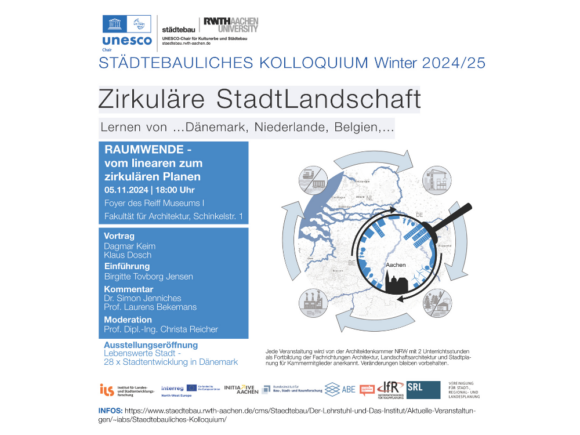
Die diesjährige Winterausgabe des Städtebaulichen Kolloquiums zieht Lehren zum räumlichen Umgang unserer europäischen Nachbarn beim Thema Zirkuläres Wirtschaften. Die zweite Veranstaltung des dreiteiligen Kolloquiums beschäftigt sich mit dem Thema „KLIMASCHUTZ – vom Mehrwert der Zirkularität“ und findet am 10. Dezember um 18:00 im Foyer des Reiff Museums in Aachen statt. ILS-Wissenschaftlerin Ann-Kristin Steines referiert dort zu „Innovativen Systemen der kreislaufbasierten Agrarproduktion“. Mehr…
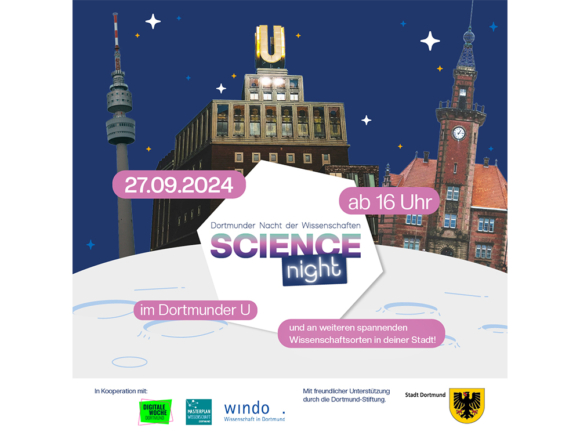
ILS bei der Science Night in Dortmund
Am 27. September startet die erste „Science Night – Die Dortmunder Nacht der Wissenschaft“ um 16 Uhr. Dort werden die zahlreichen Facetten der Dortmunder Wissenschaft präsentiert. 40 Einrichtungen und Akteur*innen öffnen ihre Türen und präsentieren ihre Arbeit. Das ILS wird im Foyer des U-Turms mit einem Multi-Touch-Tisch zum Thema „Agrarsysteme der Zukunft“ zu finden sein: Unkrautroboter, virtuelle Zäune für Kühe, Quallen und Algen auf dem Teller- dies und vieles mehr gibt es zu dort zu entdecken. Außerdem beteiligt sich das ILS an einer Führung durch die Dortmunder Nordstadt mit dem Schwerpunkt „Ankunftsquartiere“. Ankommen und Bleiben in Dortmund. Zum Programm
DOKORP 2025 – Submission deadline extended for Call for Abstracts
The submission deadline for Call for Abstracts & Roundtables has been extended until October 7, 2024 for the Dortmund Conference on Spatial and Planning Research 2025 from February 10 to 12, 2025 on the topic “Reason to Plan in Times of Multiple Crises”. More…

Abschlussveranstaltung: Digitalisierung und Nachbarschaft – Sind wir schon drin?
Wie verändert die Digitalisierung das Zusammenleben in unseren Nachbarschaften? Unter dieser Fragestellung setzte sich das von der Stiftung Mercator geförderte Forschungsprojekt „Bin ich schon drin?“ mit den Formen digitalen sozialen Zusammenhalts auseinander. Die Ergebnisse des Projekts werden auf der Abschlusstagung am 10. September 2024 in Essen vorgestellt. Mehr…

24. Konferenz für Planerinnen und Planer NRW: Programm veröffentlicht
Am 31. Oktober 2024 findet unter dem Titel „(Neue) Flächenansprüche und die Flächenwende“ die 24. Konferenz für Planerinnen und Planer NRW bei der NRW.BANK in Düsseldorf statt. Das Programm der Konferenz ist nun fertiggestellt und veröffentlicht. Auch die Anmeldung ist ab sofort möglich. Mehr…