Urban research − understanding urban change in its diversity
The process of urbanisation in the early 21st century is enormously dynamic: Urban spaces emerge, grow and change, their transformation takes many forms and is increasingly discontinuous and disparate. A better understanding of these processes is a central concern for the spatial urban researchers at the ILS. We investigate the various dimensions of urban change at different levels of scale and in international comparison. In active dialogue with practitioners, policy-makers and societal stakeholders, we gain important insights from this for the sustainable transformation and design of urban spaces.
We have three main research interests.
The process of urbanisation in the early 21st century is enormously dynamic: Urban spaces emerge, grow and change, their transformation takes many forms and is increasingly discontinuous and disparate. A better understanding of these processes is a central concern for the spatial urban researchers at the ILS. We investigate the various dimensions of urban change at different levels of scale and in international comparison. In active dialogue with practitioners, policy-makers and societal stakeholders, we gain important insights from this for the sustainable transformation and design of urban spaces.
We have three main research interests.
News
Forschung aus NRW: Der JRF-Jahresbericht 2025
Das vergangene Jahr stand für die Johannes-Rau-Forschungsgemeinschaft (JRF) im Zeichen der strategischen Weiterentwicklung. Gemeinsam mit ihren Instituten und Gremien sowie im Austausch mit der Landesregierung hat die JRF intensiv daran gearbeitet, das Profil der Forschungsgemeinschaft weiter zu schärfen. Darüber hinaus präsentieren die 15 Mitgliedsinstitute im Jahresbericht aktuelle Ergebnisse aus ihrer Forschung. Das ILS berichtet aus der wissenschaftlichen Begleitforschung zum Landeswettbewerb ways2work. Im Mittelpunkt steht dabei die Frage, ob und unter welchen Bedingungen kooperatives Mobilitätsmanagement in Gewerbegebieten Wirkung entfalten kann. Zum Jahresbericht
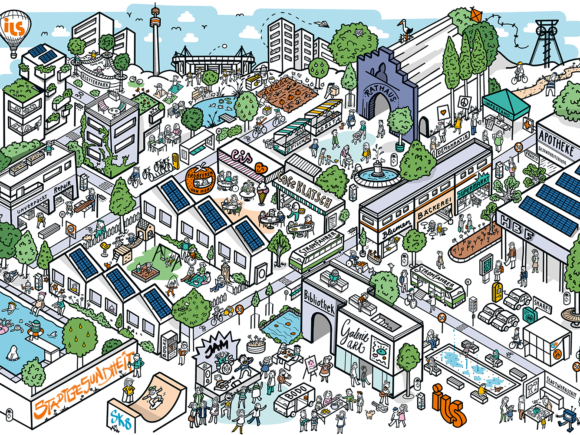
JRF vor Ort: Grün, aktiv mobil und gerecht: Wege zu gesunden Städten
Gesundheit wird immer mehr zum Thema der Stadtentwicklung – in Wissenschaft und Praxis. Städte stehen vor wachsenden Herausforderungen wie steigende Temperaturen in dicht bebauten Quartieren, Lärm- und Luftverschmutzung oder fehlende Grün- und Freiräume zur Erholung. Um gute Lebensverhältnisse für alle in urbanen Räumen zu schaffen, gewinnt ein ganzheitlicher Ansatz an Bedeutung, der Gesundheit, Umweltqualität und gerechte Lebensverhältnisse zusammendenkt. Im Fokus stehen dabei unter anderem die Sicherung ruhiger und zugleich zentral gelegener Wohnorte, der Ausbau qualitativ hochwertiger Grün- und Wasserflächen, die Förderung aktiver Mobilität sowie ein gerechter Zugang zu gesundheitsfördernden Stadträumen für alle Bevölkerungsgruppen. Bei dieser „JRF vor Ort“-Veranstaltung am 18. Mai wollen wir gemeinsam diskutieren, wie unsere Städte lebenswerter, kühler und aktiver gestaltet werden können. Zur Anmeldung
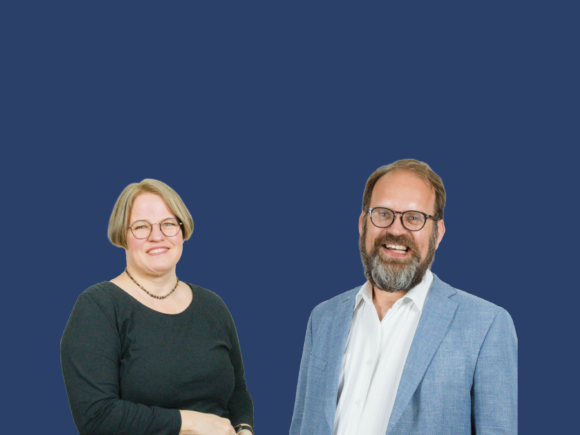
ILS-Wissenschaftler*innen im Klimabeirat der Stadt Dortmund
Dr. Janina Welsch und Dr. Thomas Klinger wurden als Mitglied bzw. stellvertretendes Mitglied des Klimabeirat der Stadt Dortmund als Vertreter*innen der Wissenschaft und Forschung vorgeschlagen. Sie werden in den nächsten Monaten die Klimaschutzpolitik der Stadt Dortmund und ihrer städtischen Gesellschaften begleiten. Aufgabe des vom Rat der Stadt berufenen Klimabeirats ist es, Anregungen für die Umsetzung und Fortführung von Klimaschutz- und Klimafolgenanpassungsprogramme zu entwickeln, bei relevanten Ratsbeschlüssen zu beraten und auf eigene Initiative Themen aufzugreifen und Projekte vorzuschlagen, die das Erreichen der Dortmunder Klimaschutzziele besonders befördern. Mehr
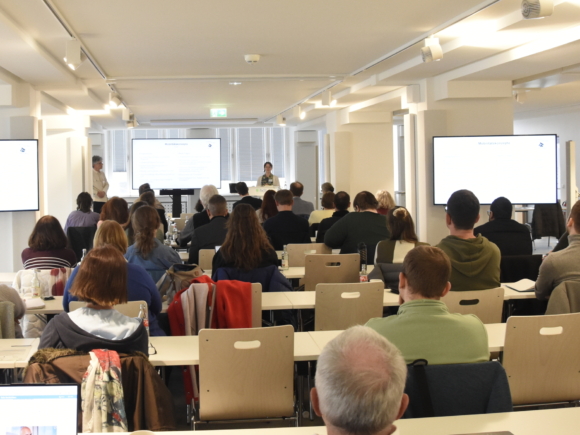
Integrierte Mobilitätskonzepte für Neubauquartiere und Einzelvorhaben – Rechtliche Regelungsmöglichkeiten
Wie lassen sich Mobilitätskonzepte für Neubauquartiere und Einzelvorhaben rechtlich verankern und langfristig sichern? Welche Rolle spielen Mobilitätskonzepte in kommunalen Stellplatzsatzungen? Diese Fragen standen im Zentrum der Veranstaltung „Integrierte Mobilitätskonzepte für Neubauquartiere und Einzelvorhaben – Rechtliche Regelungsmöglichkeiten“ am 26. März, die die ILS Research gemeinsam mit dem Zukunftsnetz Mobilität NRW organisiert hat. Mehr…
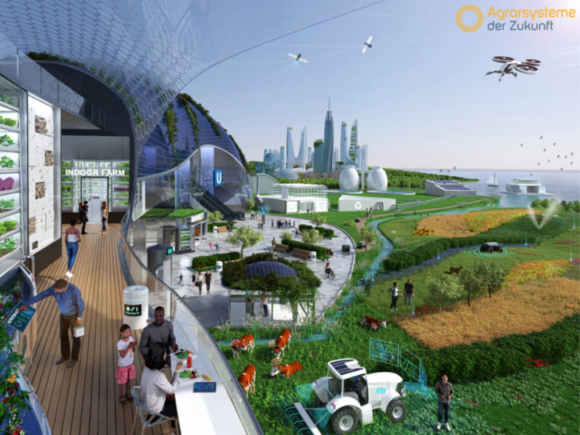
ILS-Working Paper 17: Transformation Pathways towards Sustainable Agricultural Systems – From Vision to Implementation
Wie kann der Wandel hin zu nachhaltigen Agrarsystemen gelingen? Mit dieser zentralen Frage beschäftigt sich das ILS-Working Paper „Transformation Pathways towards Sustainable Agricultural Systems – From Vision to Implementation“. Die Publikation wurde von der zentralen Koordinierungsstelle der Förderlinie „Agrarsysteme der Zukunft“ erarbeitet. Das Working Paper zeigt auf, wie der Übergang von visionären Zukunftsbildern hin zu konkreten Transformationspfaden gestaltet werden kann. Vor dem Hintergrund globaler Herausforderungen wie Klimawandel, Ressourcenknappheit und Biodiversitätsverlust wird deutlich, dass tiefgreifende Veränderungen in der Landwirtschaft notwendig sind. Zur englischsprachigen Veröffentlichung
Publications

Kreislaufwirtschaft im Verbund – Synergien zwischen Abwasser- und Lebensmittelwirtschaft
ILS scientists Thomas Weith, Ann-Kristin Koch, and Melissa Leimkühler, together with Julian Gatawis, have published an article in the journal „Geographische Rundschau“. The article examines how urban circular economies can relieve pressure on agricultural systems: climate change, resource scarcity, and land use pressure are increasing the need for sustainable solutions. Wastewater treatment plants offer great potential as a source of nutrients, but existing processes usually focus only on phosphorus. Using NEWtrient® scenarios, the article shows how new concepts can better integrate wastewater treatment plants into nutrient supply in the future. Further current selected papers can be found here.

The JUST GROW framework: conceptualizing how city regions can govern urban agriculture for equity and sustainability
ILS scientists Ann-Kristin Koch, Barbara Schröter and Kathrin Specht, together with other colleagues from the JUST GROW project, have published an article in the journal Frontiers in Sustainable Food Systems. The article deals with a new framework for establishing justice-oriented pathways to govern and catalyze the sustainable transformation of city region food systems (CRFS). Therefore, the JUST GROW framework incorporates three interlinked principles of justice into a comprehensive governance process of collective knowing, inclusive deliberation, and intentional action and calls for processes of open and inclusive co-creation with community stakeholders, decision-makers, and researchers. https://doi.org/10.3389/fsufs.2025.1653448. Further current selected papers can be found here.
Gold mining in the Colombian Amazon: empirical insights on the links between sustainability, equity, and power
ILS researcher Barbara Schröter and her colleagues have published an article in the journal Sustainability Science. The article examines how different ideas about “sustainable” gold mining in the Colombian Amazon region are causing tensions between companies, small-scale miners, indigenous communities, and government actors. The study shows that sustainable solutions are only possible if power relations and issues of justice are taken into account and diverse perspectives on sustainability are included in decision-making processes. https://doi.org/10.1007/s11625-025-01749-w. Further current selected papers can be found here.

To what extent is the REGIONALE in North Rhine-Westphalia a real-world laboratory? A regional development format put to the test
ILS Researcher Peter Stroms, Eyaiu Hassen, and Thomas Weith as well as Luise Porst from ZALF have published an article in the journal disP – The Planning Review. The article deals with real-world laboratories which can make an important contribution to initiating, researching and implementing transformative processes within society. In this context, the REGIONALE in North Rhine-Westphalia represents a highly interesting format, having frequently provided innovative and experimental regional development projects and new types of cooperation between stakeholders. Developing a set of criteria for real-world laboratories, this article examines similarities between the REGIONALE and the real-world laboratory approach and discusses both the possible opportunities and challenges that the real-world laboratory perspective could have for the REGIONALE and thus for format-oriented regional development. https://doi.org/10.1080/02513625.2025.2561515.Further current selected papers can be found here.

Stadt-Umland-Kooperation: zur Praxis gesetzlich etablierter Stadt-Umland-Räume in Mecklenburg-Vorpommern
ILS researcher Thomas Weith, together with Wolfgang Köck from UFZ and Annelie Gütte from ZALF, has published an article in the journal STANDORT. As part of the ReGerecht project, the article analyses institutionalised urban-rural cooperation using the example of Schwerin. Urban-rural interdependencies are a central topic in planning and research. The urban-rural interrelations (SUR) in Mecklenburg-Western Pomerania, which have been formalised through state planning, represent a special case that has received little attention to date. The analysis of the Schwerin urban-rural area shows that institutional anchoring has established functioning cooperation areas and coordination routines. The approach facilitates the balancing of interests and offers potential for transfer to other federal states. https://doi.org/10.1007/s00548-025-01014-3. Further current selected papers can be found here.
Events
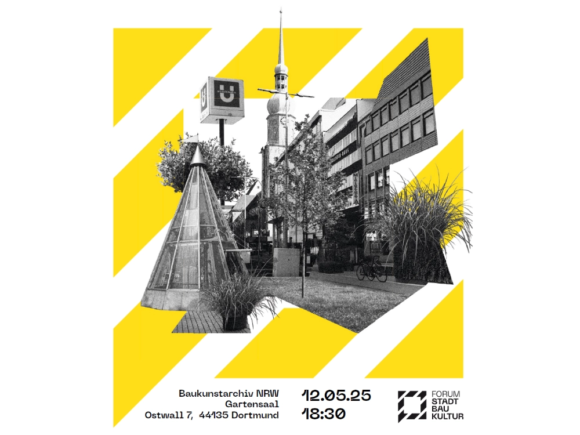
Forum Stadtbaukultur Dortmund
“RE:START Kampstraße” lautet das Thema des nächsten Forums Stadtbaukultur. Am Montag, 12. Mai 2025 um 18.30 Uhr wird im Gartensaal des Baukunstarchiv NRW um die zukünftige Gestaltung der Kampstraße in der Dortmunder Innenstadt diskutiert. Durch ihre funktionale und räumliche Bedeutung als markante Ost-West-Achse durch die Dortmunder City, nimmt die Straße eine zentrale Position mit hohen Erwartungshaltungen aus der Stadtgesellschaft ein. Ein umfangreicher Beteiligungsprozess soll die interessierte Öffentlichkeit dazu anregen, Zielvorstellungen für die Maßnahme zu formulieren. Um Anmeldung wird gebeten. Mehr…
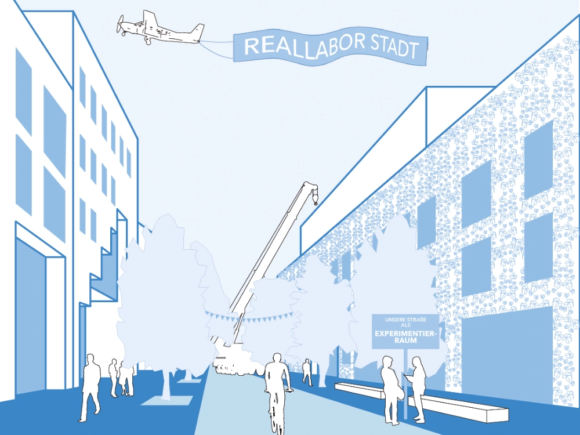
(Innen)Stadt im Wandel
Das Städtebauliche Kolloquium an der Fakultät für Architektur der RWTH Aachen befasst sich in diesem Sommer mit dem Wandel der Innenstadt. An drei Terminen werden im Foyer des Reiff Museum– von der Nutzungsmischung über Anforderungen an Flexibilität bis zur Klimaresillienz – komplexe Herausforderungen der Stadt der Zukunft diskutiert. Mehr…
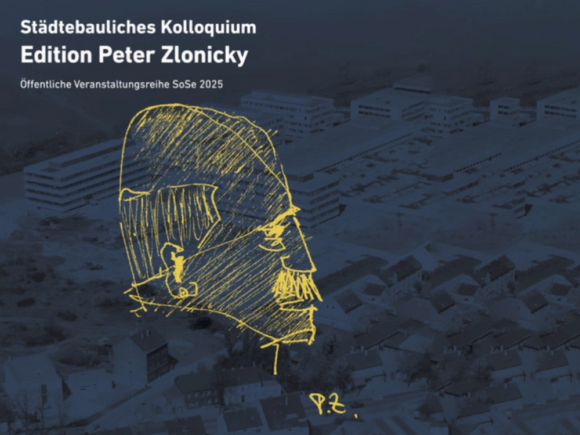
Edition Peter Zlonicky
Das Städtebauliche Kolloquium »Edition Peter Zlonicky« an der TU Dortmund eröffnet anlässlich seines 90. Geburtstags an drei Terminen im Sommersemester 2025 multiple Perspektiven auf das Lebenswerk Peter Zlonickys. Mehr…

Nächstes Fachforum „Wohnen macht Stadt“ am 1. Juli
Anfang Juli stellen wir beim Fachforum „Wohnen macht Stadt“ im Baukunstarchiv in Dortmund die vielseitigen Auswirkungen von Brachflächenentwicklung auf die Quartiersebene in den Mittelpunkt. Dabei werden insbesondere Projekte betrachtet, die sich der Revitalisierung von Brachflächen widmen und dadurch neue Impulse für bestehende Quartiere setzen oder gar selbst neue Quartiere entstehen lassen. Mehr…
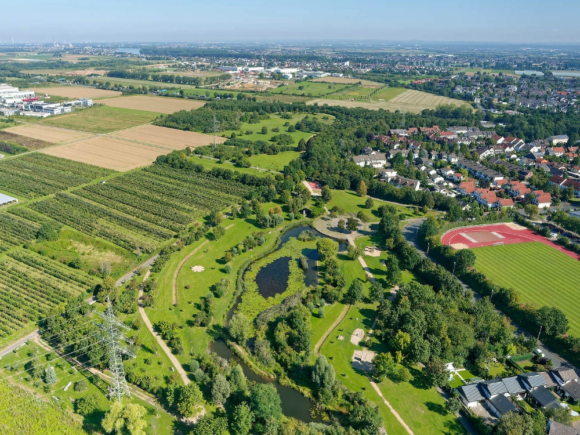
Flächenansprüche regional steuern: Tagung zum Ergebnistransfer aus dem MORO Fläche
Im Modellvorhaben der Raumordnung „Regionale Steuerung der Siedlungs- und Freiraumentwicklung” haben sieben Modellvorhaben unterschiedliche Ansätze einer verbesserten Mengen- und Standortsteuerung der Siedlungs- und Freiraumentwicklung erprobt und weiterentwickelt. Die Veranstaltung „Flächenansprüche regional steuern“ am 16. Mai in Kassel bietet die Möglichkeit, aus den vielfältigen Erfahrungen der Modellvorhaben zu lernen. Das breite Spektrum an Herausforderungen und Lösungsansätzen eröffnet wertvolle Anknüpfungspunkte für andere Regionen, die ihre Siedlungsentwicklung flächensparend und zukunftsfähig gestalten möchten. Zur Anmeldung